

- November 17, 2026
- By Melissa Brachfeld
Hiding behind an anonymous handle or a blank profile picture on a messaging app might feel safe, but new University of Maryland research shows that what someone posts on one chat service can easily blow their cover on another.
By chaining together routine features across popular platforms like Telegram, WhatsApp, Tinder and KakaoTalk (South Korea’s dominant messaging app, used by 94% of the population) researchers from UMD and Korea Advanced Institute of Science and Technology (KAIST) demonstrated how an adversary can connect isolated pieces of metadata to expose real identities and pinpoint physical locations without breaking encryption or reading a private message.
The study’s findings carried immediate real-world impact. Following disclosure by the research team, affected platforms updated their services to tighten rate limits — like allowing fewer queries about contacts and lengthening lockout timeframes — and block the specific automated methods detailed in the paper.
Before those changes were implemented, executing such an attack required remarkably little effort. Consider this scenario: A college student posts on Telegram under an anonymous handle with a blank profile picture, confident their identity is hidden. Like millions of others, they also use a main messaging app for family chats and Tinder to meet people locally. They assume these accounts operate in total isolation. But because all three rely on the same phone number, an attacker scraping basic app features can grab that number from Telegram, look up the student’s legal name on the mainstream app, and run their profile picture through a location search on Tinder to uncover who they are and where they spend their afternoons.
“While privacy risks are often well mitigated within a single platform, as more people use multiple messaging apps, these platforms’ slices of privacy can be exploited to build a complete privacy profile of a target,” said study co-author Yonghwi Kwon, assistant professor of electrical and computer engineering with an appointment in the University of Maryland Institute for Advanced Computer Studies (UMIACS). He worked with KAIST researchers Soyoung Lee, a fifth-year doctoral student in information security; Sooel Son, associate professor of computing; and Junkyu Kang, a first-year doctoral student.
Kwon’s team had set out to examine how multi-app habits create broader systemic risks, and soon realized that as people juggle multiple services on one phone, security protections built into one platform can be undermined by permissive defaults on another.
In South Korea, where 56% of Telegram users rely on pseudonyms and 74% of KakaoTalk users display their legal names, an attacker running automated address book queries can instantly bridge those two worlds. Although the study’s empirical tests relied heavily on KakaoTalk’s dominance and South Korea’s compact eight-digit mobile numbering system, Kwon noted that the underlying mechanics carry broad implications.
“Having a single dominant service provider in a region significantly amplifies this problem,” said Kwon, who is also a member of the Maryland Cybersecurity Center. He noted that while market fragmentation in the U.S. offers a natural buffer against mass database scraping, cross-app data linking remains a threat anywhere users reuse shared identifiers like phone numbers or photos across multiple accounts.
Unlike high-profile data breaches or broken cryptographic protocols, this threat relies on piecing together features that individually don’t seem sensitive; hence, platforms often overlook them.
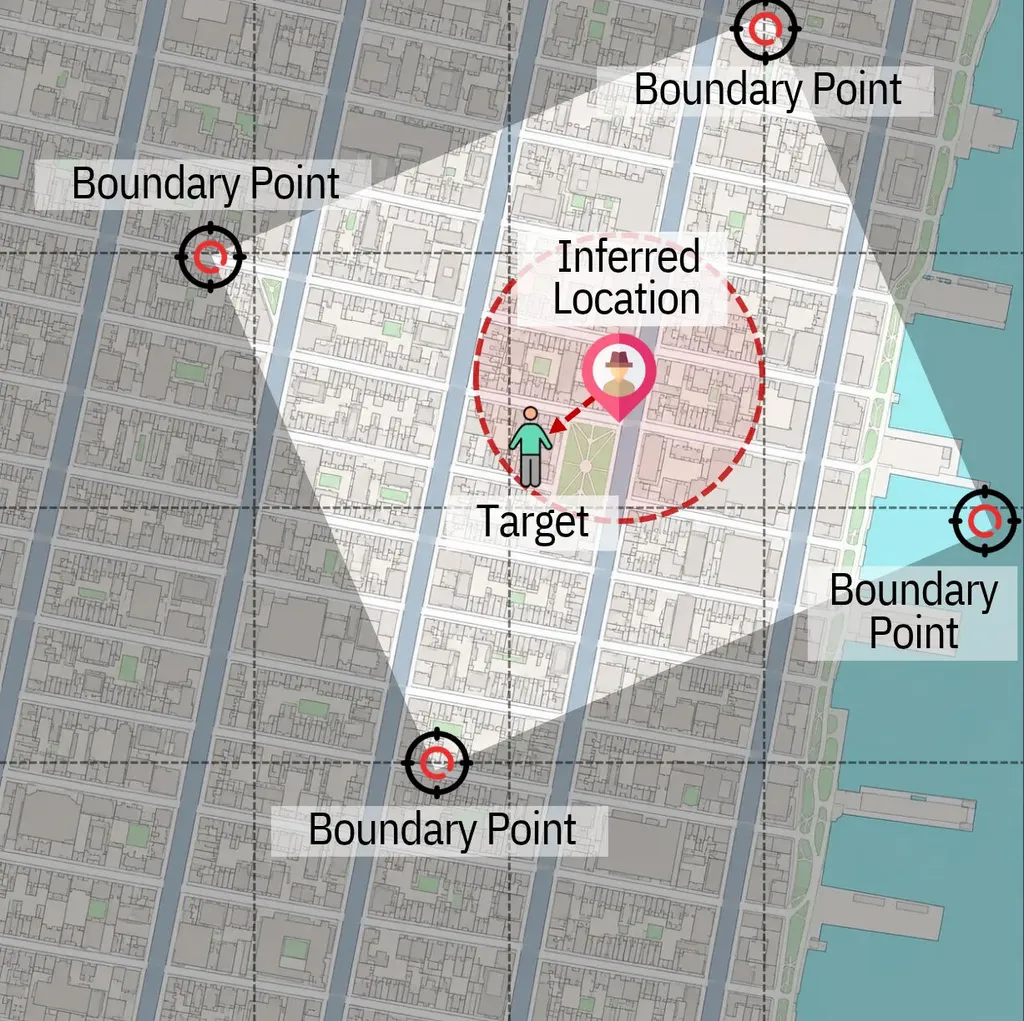
To demonstrate the consequences of leaving those seemingly unimportant pieces of information unsecure, the researchers executed an attack that physically located users within an average margin of 324 meters. That result was not a universal GPS tracking capability, but rather a targeted exploit with specific prerequisites: the attacker extracts a victim’s profile photo, confirms they have an active profile on a geosocial app like Tinder, and runs automated queries across systematic GPS coordinates over roughly 18 minutes to narrow down their location bounding box.
While real-time tracking could obviously lead to physical harm, Kwon noted that cross-platform data gathering poses an immediate risk by fueling social engineering attacks; phishing lures become significantly more convincing when an attacker can weave in real names, current locations, and recent profile updates harvested across connected accounts.
Kwon noted that while those initial platform patches prevent the exact attack chains detailed in the paper from working on the same scale today, balancing security with usability remains an ongoing challenge. Stripping photos or names from contact lists makes apps harder to use, and can lead to errors like accidentally adding the wrong person.
Everyday users can safeguard their privacy by auditing their accounts, deleting unused profiles, avoiding identical photos on anonymous and real-name apps, and registering sensitive accounts with secondary phone numbers.
At the same time, long-term security depends on developers enforcing strict query limits on contact lookups, monitoring for suspicious automated contact additions, keeping personal identifiers hidden from public searches by default, and introducing location fuzzing to protect user privacy.
A visual demonstration of how an adversary can run automated queries across systematic GPS coordinates on geosocial apps to establish boundary points and narrow down a target's physical location within an average margin of 324 meters. (Graphic courtesy of Yonghwi Kwon)