
- May 12, 2026
- By Annie Krakower
Bruce Springsteen rockin’ out for a raucous Cole Field House crowd. Juan Dixon sporting the net around his neck after the men’s basketball team won it all in 2002—and then meeting President George W. Bush. Feathered hair and tube socks reaching new heights as ’80s Terps tanned on the football stadium’s bleachers.
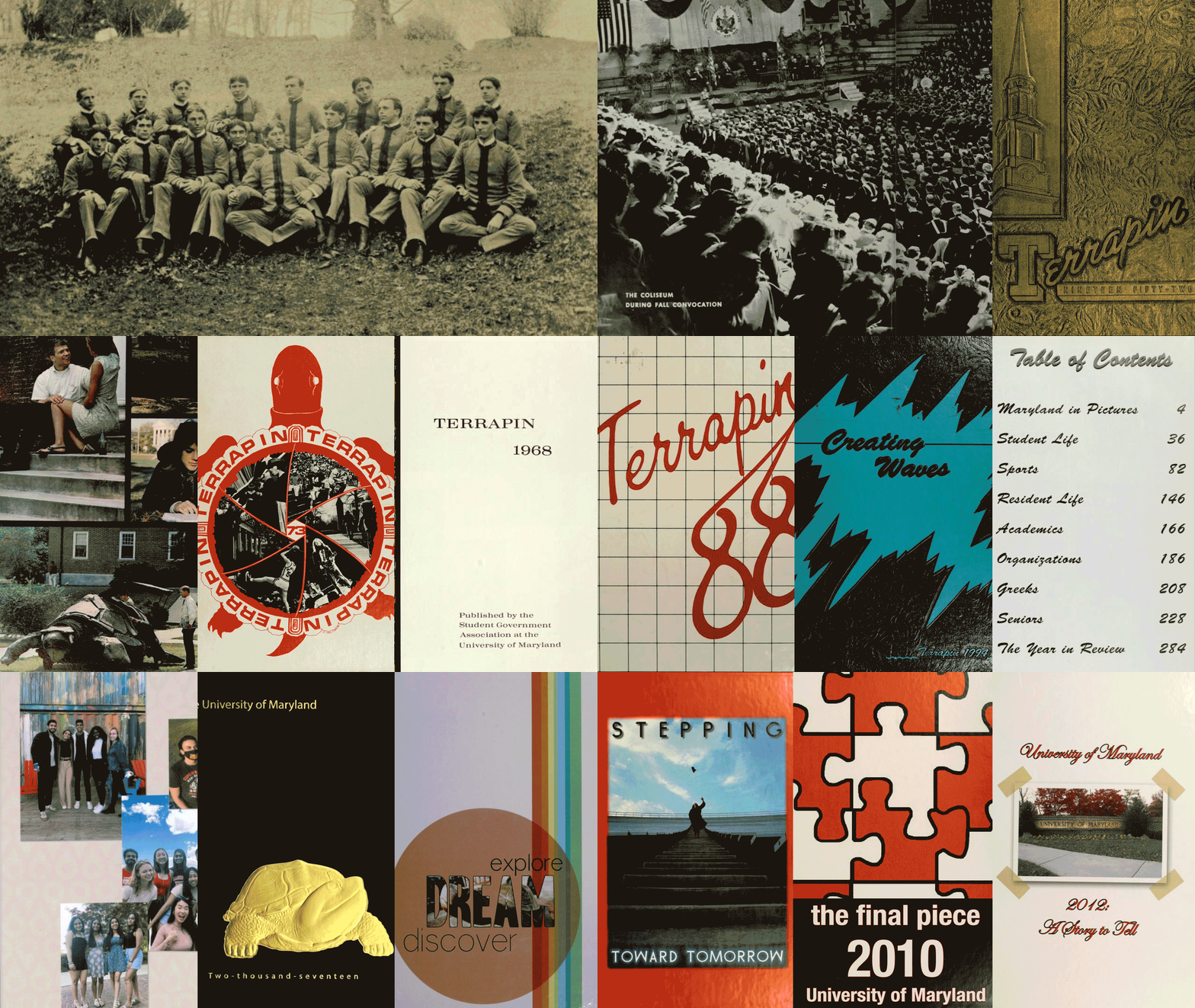
University of Maryland students have chronicled all of that and much more throughout the years in the Terrapin yearbook, capturing an enduring record of campus life from a third-floor office in the South Campus Dining Hall. But after more than a century (and a few other names, like Reveille, Us and Terra Mariae), it’s turned its final page: With plans for a 2025 book started and ultimately scrapped, this has been the first entirely yearbook-free academic year in living memory.
“It’s been a conversation that’s been ongoing for several years. There’s been declining interest, declining numbers. It’s just a trend that’s happening pretty much all over the country,” said Craig Mummey, general manager of Maryland Media, which produced the yearbook. “We held on longer than many.”
The roughly 2,400 college yearbooks being published in 1995 had already dwindled to around 1,000 by 2013. Schools big and small, including the University of Wisconsin, Wesleyan University and Johns Hopkins University, shut their yearbooks for good in more recent years. Contributing factors, Mummey said, include the increasing cost of production, social media’s ability to chronicle personal experiences and the pandemic altering how students view campus life.
Terps, though, are aiming to keep a glimmer of that yearbook nostalgia alive. This year, The Diamondback, also published by Maryland Media, launched The Old Line, a year-end retrospective available both in print and online. With a shorter, more magazine-like feel than the Terrapin, the first edition covers sports, campus events like the First Look Fair and Homecoming, and all that snow.
“We hope that it will continue to grow and become annual thing,” Mummey said.
In the meantime, Maryland Today flipped through the memories with Terrapin editors from over the decades:
Paul Souders | Editor-in-chief, 1987

I was out photographing the fall, winter and spring sports seasons, walking campus, shooting a ton of feature shots, trying to think of how to capture this snapshot in time of the mid-’80s, mid-Atlantic college life. It was old-school, shooting on black-and-white or color film. I was really emphatic that I wanted to include color photography in the book, which pushed the price up. I had a lot of battles with the managing director of Maryland Media. (We negotiated downward.)
There were definitely constraints, but at the same time, there was this incredible opportunity to do kind of whatever I wanted. I was young and not very bright, so I would work all day, drive all night, trying to photograph a football game or a lacrosse game or a basketball game, and then drive 300 miles back to develop the film.
I did not evolve—I still do travel and wildlife photography, traveling to more than 65 countries and all seven continents over the last four decades. It’s been a fun ride. Thinking that it’s 40 years ago that I took that project on, it was the very start of my career.
Beth Panitz ’92 | Seniors editor, 1992

Designing the yearbook was low-tech at the time, so it was very labor-intensive. I remember literally having to draw out the rectangles where a photo would be by hand. We would design the layouts using these large rectangular grid pages, similar to graph paper, with each page representing a two-page spread in the yearbook. I recall packing up a whole stack of those grid pages with me for my train ride home for Thanksgiving and spending part of the break designing pages for the senior section.
I had the opportunity to interview several seniors, as well as to write and edit articles about them. I enjoyed learning about some amazing Terps and getting to share their stories. One was a mom who took time to raise her children and was now graduating. Someone else started out, and then took a couple years off. He realized what he really wanted to do, and then returned and switched majors. Everybody had a different path.
Abby Robinson ’02, M.S. ’04, Ph.D. ’07 | Sports editor and business manager, 2000 | Sports and business editor, 2001 | Editor-in-chief, 2002

It was an interesting year to be the editor-in-chief, because there were a lot of national and local tragedies that occurred that year, and we were often replacing spreads in the news section for things like 9/11 and the tornado that hit campus that year. One core memory I have is that as a yearbook staff, we had to staff the senior portraits, and one of my sessions for doing that was when the tornado came through. I’m walking to the Stamp Student Union to work my session, which was on a higher level in the union, and the alarm started going off. They ushered us all into the basement, where we needed to stay until the coast was clear.
I wasn’t the typical editor-in-chief of the yearbook—I was a bioengineering major. But I was able to continue my creative outlet and my interest in writing, and then pursued a communications field after I got my Ph.D. I don’t think at the time that I knew that I could meld my interest in design and writing with my interest in science and engineering to make a career out of it.
Ana Hurler ’18 | Staff writer, 2016 and 2017 | Editor-in-chief, 2018

I really pushed our staff photographers to try to be more integrated in capturing the everyday of student life on campus instead of specific events or “Here’s a beautiful picture of McKeldin.” We all have seen those pictures, right? If you’re gonna do the McKeldin picture, maybe, “Here’s some people hanging out on McKeldin.” The campus may still look the same, roughly, but in those types of pictures, you get to appreciate people’s fashion or look at the old phones that they had or “Wow, look at those laptops, how much they’ve changed.”
Looking back on it as a whole, my favorite experience really just was feeling like you got to be a part of something, and you had something physical that you put together at the end of it.
Connor Senay ’20 | Athletics section editor, 2017 | Managing editor, 2018 | Editor-in-chief, 2020

When COVID hit for us, the weird thing was we couldn’t really focus on spring sports or spring activities because they all got interrupted. So it was a lot of gathering whatever had been documented from the fall semester, and then just using a lot of friends and friends of friends to tell their stories of the year and how COVID had brought their year to a halt. Everyone essentially had to evacuate campus, so it really emphasized the beginning of the social distancing aspect of society. It was a strange time navigating it all, but I was really happy with how it turned out.
It's just nice to have it to flip through—just a glimpse into what life was like.